"Calendar" refers to a system for organizing time, whereas "calender" is an industrial machine used for smoothing or glazing materials like paper or fabric. When users search for calender or calendar, they are usually attempting to clarify which spelling applies to their specific context. Because these terms are homophones, they sound exactly the same, which leads to frequent confusion in professional and academic writing.
SpellingOctober 18, 2026
Calendar vs. Calender: What Is the Correct Spelling?
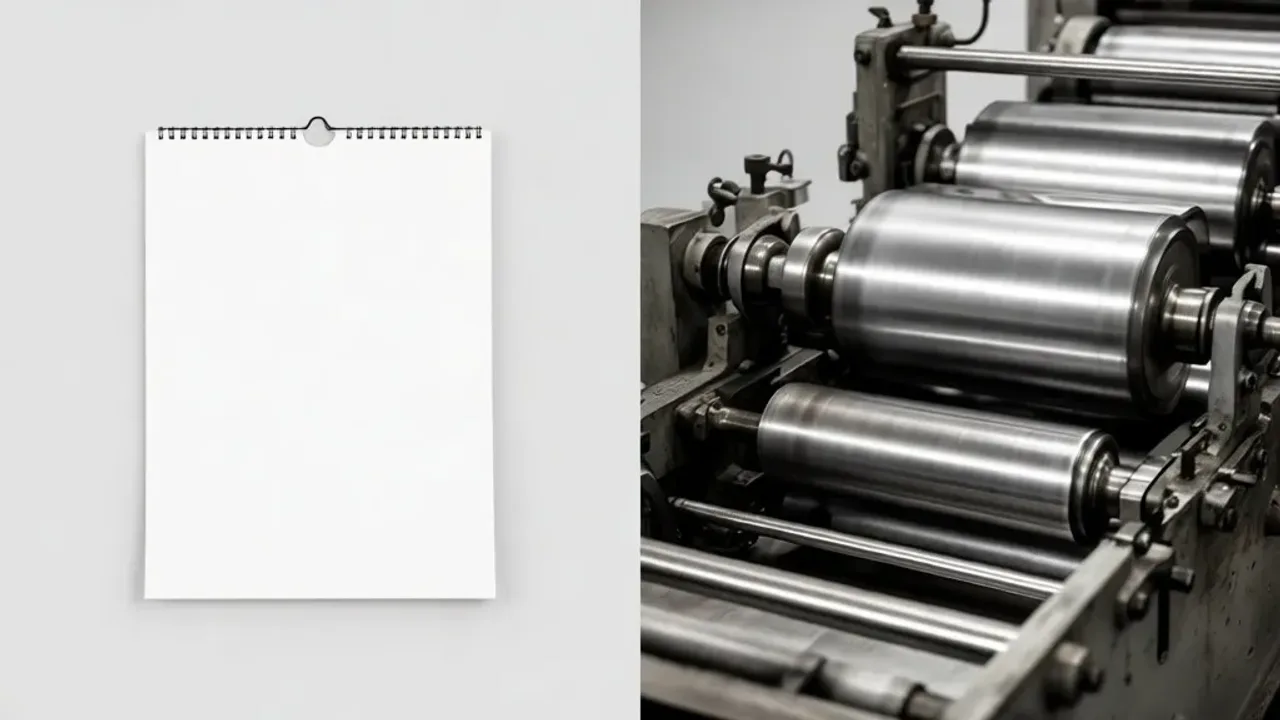 AI-generated image
Key Takeaways:
- Choose calendar for any reference to dates, schedules, or time-tracking systems.
- Use calender only when describing industrial machinery used to process paper or textiles.
- These words are homophones, which causes most spelling errors.
- Focus on the machine's function or the time-tracking application to ensure the correct spelling.
| Feature | Calendar | Calender |
|---|---|---|
| Primary definition | Time-tracking system | Industrial machine |
| Context | Daily planning | Manufacturing |
| Material function | None | Smoothing or glazing |
| Common usage | High frequency | Low frequency |
When to Use Which
Use calendar when you need to track your daily appointments, mark upcoming events, or reference a specific date. This term applies to both physical wall planners, desk organizers, and digital scheduling tools found on computers or mobile devices. Whenever you are discussing the passage of days, weeks, or months, this is the correct spelling to employ.
In contrast, choose calender exclusively in industrial contexts. It describes the physical hardware that uses pressure to finish surfaces, such as the heavy rollers used in paper mills or textile production facilities to create a smooth, glazed, or textured finish. This term is highly specialized and rarely appears outside of engineering or manufacturing literature.
Choosing between calender or calendar requires a quick check of the subject matter at hand. It is straightforward. If the context involves a schedule, you need the time-tracking term. If the context involves heavy rollers and raw materials, you need the manufacturing term.
Causes of Confusion
The confusion stems from the fact that these words are perfect homophones. Because they sound identical when spoken, writers often default to the common term, calendar. This happens even when the context describes mechanical processes. When researching calender or calendar, consider these steps to ensure accuracy:
- Verify if the subject involves time or manufacturing.
- Check if the context implies a machine.
- Apply the spelling rule: time-related terms use the "-ar" ending.
- Consult a dictionary if you are still unsure of the specific application.
Spelling matters. Precision is vital. Always double-check your work before finalizing any document.
Advanced Distinctions in Manufacturing
While the calendar is a household item, the calender is a significant piece of industrial equipment. In the paper industry, the calender stack consists of a series of heavy vertical rollers. Paper passes through these rollers to achieve a specific thickness and surface quality. This process is essential for high-quality printing paper, where a smooth surface is required to prevent ink bleeding.
Similarly, in the textile industry, calenders are used to impart specific finishes to fabrics. This might involve heat, pressure, or chemical additives to ensure the cloth has the desired luster or texture. Because this is a mechanical process, the word is derived from the French "calandre," which relates to the cylinder shape of the rollers. Understanding this etymological root can help you remember the distinction between the time-based spelling and the machine-based spelling.
Frequently Asked Questions
Is "calender" just a misspelling of "calendar"?
No, calender is a distinct, valid word. It refers to a specific piece of manufacturing machinery, whereas "calendar" relates strictly to time-tracking systems.
How can I remember the difference?
Associate "calendar" with the year, which also ends in "-ar." Use this association to distinguish it from the machine-related "calender," which ends in "-er" like many other mechanical nouns.
Can I use "calender" for a schedule?
No. Using "calender" for a schedule is incorrect. Always use "calendar" when discussing dates, months, or appointments.
Are these words ever interchangeable?
They are never interchangeable. Their meanings belong to separate domains of language, and using one for the other creates an immediate error in meaning.
Why do spellcheckers sometimes miss this error?
Spellcheckers often fail to flag this because both are valid English words. You must verify the context manually to ensure the intended meaning is captured correctly.
Always use "calendar" for time-related scheduling and reserve "calender" solely for industrial machines used to finish materials. Remembering that the time-tracking term ends in "-ar" is the most effective way to prevent errors and maintain professional standards in your writing.
Share: