Eight yards is equivalent to 24 feet. Many individuals ask how long is 8 yards when planning construction, landscaping, or textile projects, as understanding this measurement is essential for accurate material procurement. Whether you are measuring fabric for a large-scale project or laying out a garden path, knowing how this distance translates into feet, inches, and meters is highly beneficial for precision.
MeasurementsNovember 9, 2026
How Long Is 8 Yards? 24 Feet and Metric Equivalents
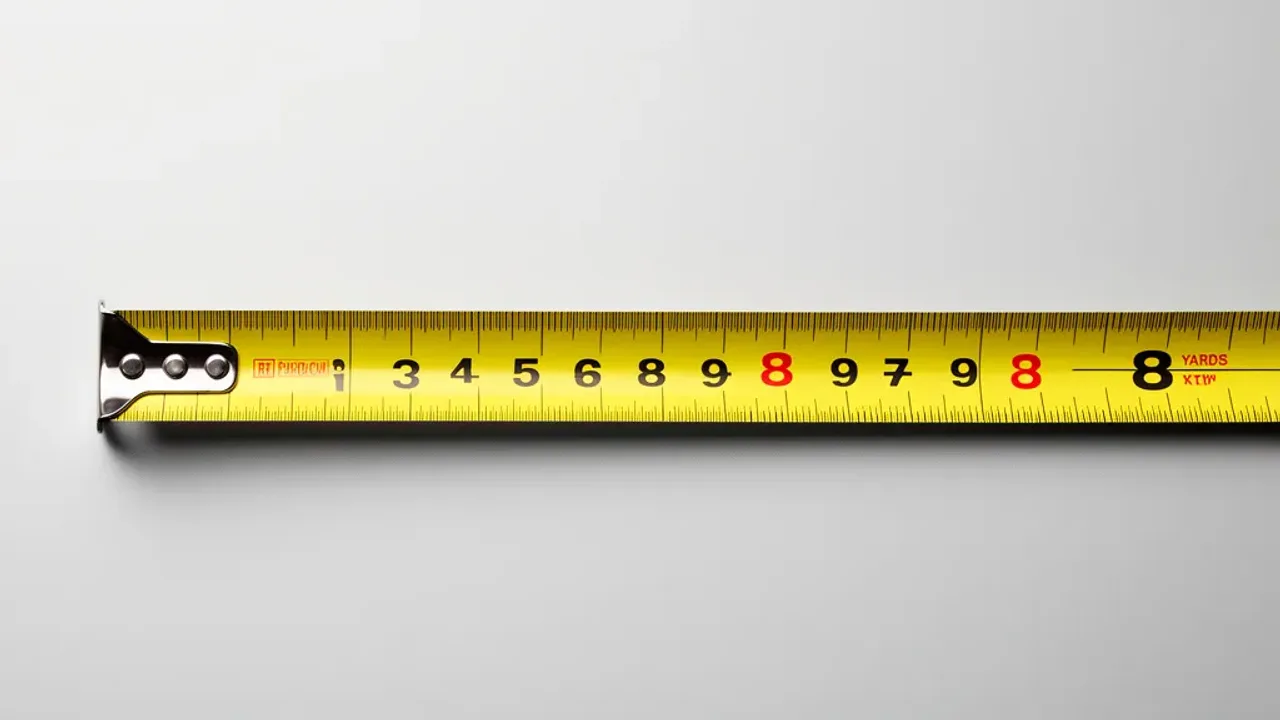 AI-generated image
Key Takeaways:
- Eight yards equals exactly 24 feet or 288 inches.
- The metric equivalent for this length is 7.3152 meters.
- Converting yards to smaller units requires multiplying by 3 for feet or 36 for inches.
- Standard measurements remain consistent across all professional and residential projects.

| Unit | Measurement for 8 Yards |
|---|---|
| Feet | 24 feet |
| Inches | 288 inches |
| Meters | 7.3152 meters |
| Centimeters | 731.52 centimeters |
Standard Measurements and Definitions
The yard stands as a fundamental unit of length within the US customary system. By formal definition, one yard is established as exactly 3 feet or 36 inches. When a user investigates how long is 8 yards, they look at a fixed distance that serves as a foundation for many industrial standards. It is a simple calculation. This measurement remains a critical benchmark for builders and designers alike.
The consistency of the yard is vital. Because it is tied directly to the foot, any calculation involving yards can be scaled down easily. This modularity makes it a favorite for those working in field construction where quick, on-the-spot math is required. Understanding the relationship between these units prevents costly mistakes in material ordering.
Practical Applications in Daily Tasks
There are numerous scenarios where you might need to determine this distance. Whether you are a professional contractor or a hobbyist, clarity is paramount.
- Textile and Fabric Projects: When buying fabric in bulk, understanding 8 yards is common. It provides enough length for large curtains or multiple upholstery pieces.
- Landscaping and Gardening: If you are installing a fence or a walkway, 24 feet of linear space can define the perimeter of a small garden plot.
- Construction Planning: Estimating the amount of lumber or trim needed for a room often involves multiples of the standard yard.
When working with these measurements, keep these items in mind:
- Confirm if the project requires imperial or metric units before starting.
- Use a standard measuring tape to ensure high accuracy.
- Keep units consistent throughout the task to avoid conversion errors.
- Double-check your math if the project involves expensive materials.
- Clean your measuring tools after use to maintain legibility.
Converting Measurements with Precision
Conversion is a skill that saves time. When you know that one yard equals 36 inches, finding the total for 8 yards is straightforward multiplication. The result, 288 inches, is a number often seen on blueprints and technical drawings. Accuracy is the goal.
The metric system also plays a significant role in modern construction. Many tools and materials are labeled in both systems. By multiplying the yardage by 0.9144, you arrive at the metric value. This is a standard conversion used globally. It bridges the gap between different regional standards.
The Importance of Units in Construction
Standardization prevents confusion. In the United States, the yard is the primary unit for many heavy-duty materials. Concrete, gravel, and fabric are almost exclusively sold by the yard. If you order 8 yards of material, you are essentially ordering 24 feet of linear volume or length. This clarity helps in logistics and budgeting.
Errors in conversion lead to waste. If you miscalculate the inches when cutting material, you might end up with pieces that are too short. Always measure twice. Precision is free; mistakes are expensive. By relying on the fixed conversion factor of 3 feet per yard, you eliminate the guesswork.
Frequently Asked Questions
How many feet are in 8 yards?
There are exactly 24 feet in 8 yards. Since one yard consists of 3 feet, you multiply 8 by 3 to reach this total.
What is 8 yards in inches?
8 yards equals 288 inches. You determine this by multiplying 8 yards by 36, the number of inches in one yard.
How do I convert 8 yards to meters?
To convert 8 yards to meters, multiply the value by 0.9144. This results in 7.3152 meters.
Is 8 yards considered a long distance?
It depends on the context. It is common for textiles but short for large-scale engineering or highway planning.
Are there variations in how a yard is measured?
The yard is a standardized unit defined as 3 feet. The definition remains consistent in the US customary system across all industries.
Why is it helpful to know the conversion to inches?
Knowing the conversion to inches is helpful for small-scale projects where precision is measured in fractions of an inch. It allows for tighter tolerances.
Can I use a metric tape for this?
Yes, you can. Simply look for the 731.52-centimeter mark if your tape is calibrated in centimeters, which is equivalent to 8 yards.
Understanding how long is 8 yards provides a reliable basis for any project. Always use standard conversion factors to keep results accurate and your materials perfectly sized.
Share: