The study of entomology offers a fascinating glimpse into the diversity of life on Earth. Among the many groupings of arthropods, insects that start with e represent a unique collection of species ranging from the powerful Eastern Hercules beetle to the curious earwig. Understanding these creatures requires a look into their biology, their behavior, and the roles they play in their natural environment.
Word ListsOctober 23, 2026
Insects That Start With E: A Complete Guide to Common Species
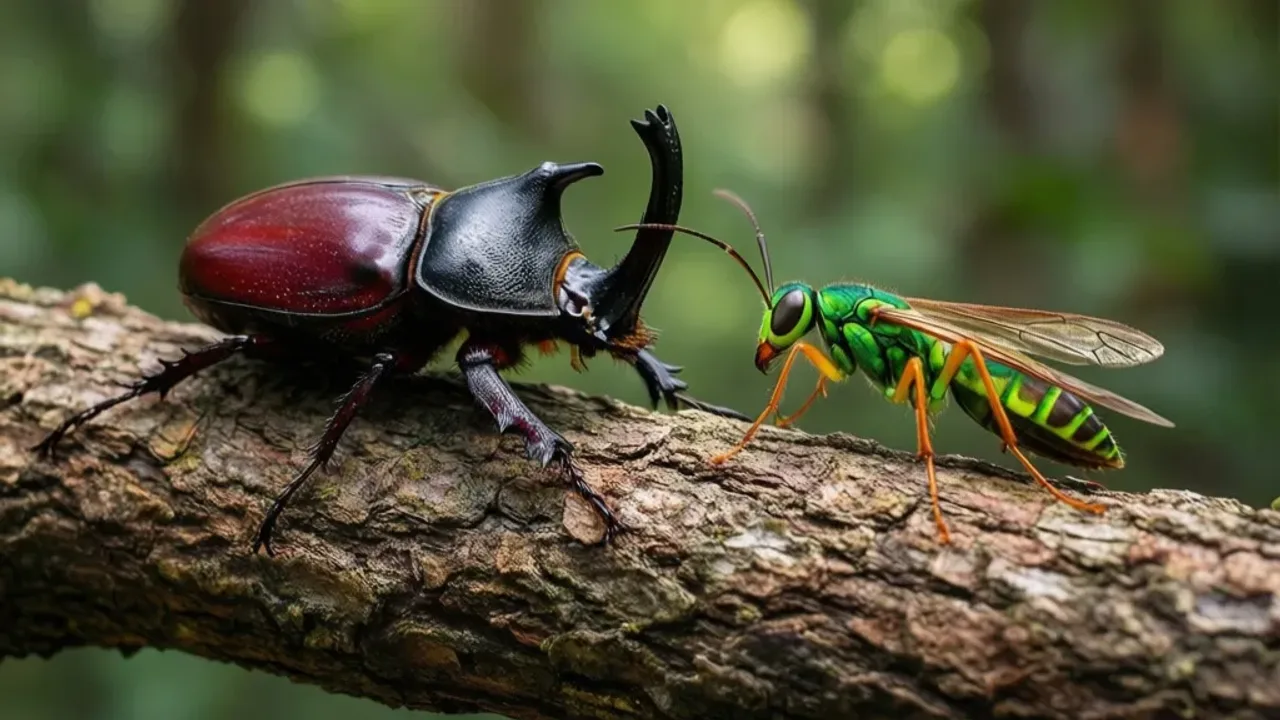 AI-generated image
Key Takeaways:
- The Eastern Hercules beetle is recognized for its massive physical size and strength.
- The emerald cockroach wasp displays a distinctive metallic green color.
- Proper classification is vital for studying indigenous insects in the wild.
- Field observations are essential for tracking the activity of local insects.
- Many species in this group are beneficial to their respective ecosystems.
Concise Descriptions for Educational Materials
Educational resources often focus on the most visually distinct or behaviorally interesting species. When looking at insects that start with e, several stand out for their unique traits. The Eastern Hercules beetle is perhaps the most famous, known for its incredible ability to lift objects much heavier than itself. Its presence in the forest is a sign of a healthy natural environment.
Earwigs, belonging to the order Dermaptera, are frequently misunderstood. While their pincers might look intimidating, they are primarily used for defense or social interaction. The emerald cockroach wasp is another marvel; its metallic green color is not just for show—it is a result of structural coloration that helps the insect blend into lush, tropical foliage.
- The Eastern Hercules beetle is a large, powerful insect known for its strength.
- Earwigs are recognized by the pair of forceps-like pincers on their abdomen.
- The emerald cockroach wasp is a solitary insect with a bright metallic green color.
- The imperial moth features large, expansive wings with yellow and purple patterns.
- Eutropidacris cristata is a grasshopper species noted for its large physical structure.
- The drone fly, Eristalis tenax, mimics the appearance of a common honey bee.
- Ellychnia corrusca is a firefly often found on tree trunks in early spring.
- The European hornet is a large, social wasp often found in wooded areas.
- Eumenes, or potter wasps, are known for building mud nests in sheltered spots.
- Ephemera danica is a species of mayfly that plays a key role in aquatic food webs.
Creative and Playful Profiles
Nature has a way of creating characters that seem plucked from a storybook. The earwig, for example, has a mysterious pincer-focused personality that keeps it hidden in dark, damp corners. Small and elusive, it prefers the quiet life under piles of decaying leaves. It is a master of the garden floor.
The emerald cockroach wasp is a true jewel of the insect world. It glimmers under the sun, a tiny hunter that is as beautiful as it is precise. Meanwhile, the Eastern Hercules beetle acts as the forest's gentle giant. It moves slowly, with armor that reflects the strength of its natural environment.
- The earwig has a mysterious pincer-focused personality.
- The emerald cockroach wasp is a bright, shimmering jewel of the wild.
- The Eastern Hercules beetle represents pure forest strength and endurance.
- The drone fly is a master of disguise, fooling many with its bee-like coat.
- The imperial moth wears a royal coat of yellow and purple colors.
- The earwig prefers the quiet life under damp garden leaves.
- Ellychnia corrusca brings a spark of life to barren forest bark.
- Potter wasps show great architectural skill with their mud-built homes.
- Mayflies like Ephemera danica spend most of their lives underwater.
- The European hornet is a bold protector of its nest in hollow trees.
Scientific and Formal Classifications
Classification is the backbone of biological research. By organizing insects that start with e into specific taxonomic groups, scientists can better understand evolutionary relationships. This process involves examining physical traits, reproductive habits, and genetic markers. The following table highlights some of the primary classifications for these species.
| Insect | Taxonomic Classification | Standard Nomenclature |
|---|---|---|
| Eastern Hercules Beetle | Scarabaeidae | Dynastes tityus |
| Earwig | Dermaptera | Forficulidae |
| Emerald Cockroach Wasp | Ampulicidae | Ampulex compressa |
| Imperial Moth | Saturniidae | Eacles imperialis |
| Drone Fly | Syrphidae | Eristalis tenax |
Accurate identification is not just for scholars. It allows the public to appreciate the biodiversity in their own backyard. Whether you are observing a wasp or a beetle, knowing the standard nomenclature aids in finding reliable information.
Field Observation Procedures
Observing insects in their natural environment requires patience and the right tools. Many enthusiasts enjoy documenting their findings to contribute to citizen science projects. If you are interested in seeing these species, follow these professional recommendations.
- Research the specific natural environment of the insect in question.
- Use a handheld magnifying glass to examine unique physical structures.
- Maintain a quiet and still presence to avoid disturbing the subjects.
- Document the time and exact location of your findings for a record.
- Verify the taxonomic classification using peer-reviewed digital databases.
- Avoid handling the insects, as this can cause stress or damage to their wings.
- Visit areas known for high biodiversity during the early morning hours.
Poetic and Descriptive Snippets
Sometimes, the best way to appreciate an insect is through a poetic lens. These descriptions capture the essence of their behavior and appearance without the need for technical jargon. A flash of green, a tiny hunter bold. Under the bark, the earwig waits in the dark. Hercules of the forest floor, armored thick and ready for the day.
- A flash of green, a tiny hunter bold.
- Under the bark, the earwig waits for the night.
- Hercules of the forest floor, armored thick and ready.
- Yellow wings like sunset skies, the imperial moth flies.
- A mimic in the garden, the drone fly buzzes past.
- Quiet traveler on the tree, the firefly rests.
- Small pincers held up to the light in defense.
- The potter wasp shapes mud with delicate care.
- Mayflies dance above the water in a brief display.
- The hornet guards its wood-pulp home with vigilance.
Frequently Asked Questions
Are all insects that start with e harmful to humans?
No. Most are not dangerous. They serve specific roles in their natural environment and generally avoid human interaction unless threatened.
Which is the largest insect on this list?
The Eastern Hercules beetle is one of the largest in North America. See University of Florida for more research data.
Do all these insects have standard nomenclature?
Yes. All listed insects have standard nomenclature used by scientists worldwide. Consult Smithsonian Institution resources for detailed guides.
Can I find these insects in LA County?
Yes. Many species exist in the SoCal area. Detailed field observations in LA County can confirm their presence. Check NHM data for local lists.
Where can I find more information?
Academic institutions provide extensive data on entomology. Refer to UCLA or similar research centers for local studies and identification assistance.
Summary
The study of these species allows for a deeper understanding of the natural environment. Always prioritize accurate documentation to ensure the integrity of your research.
Share: